


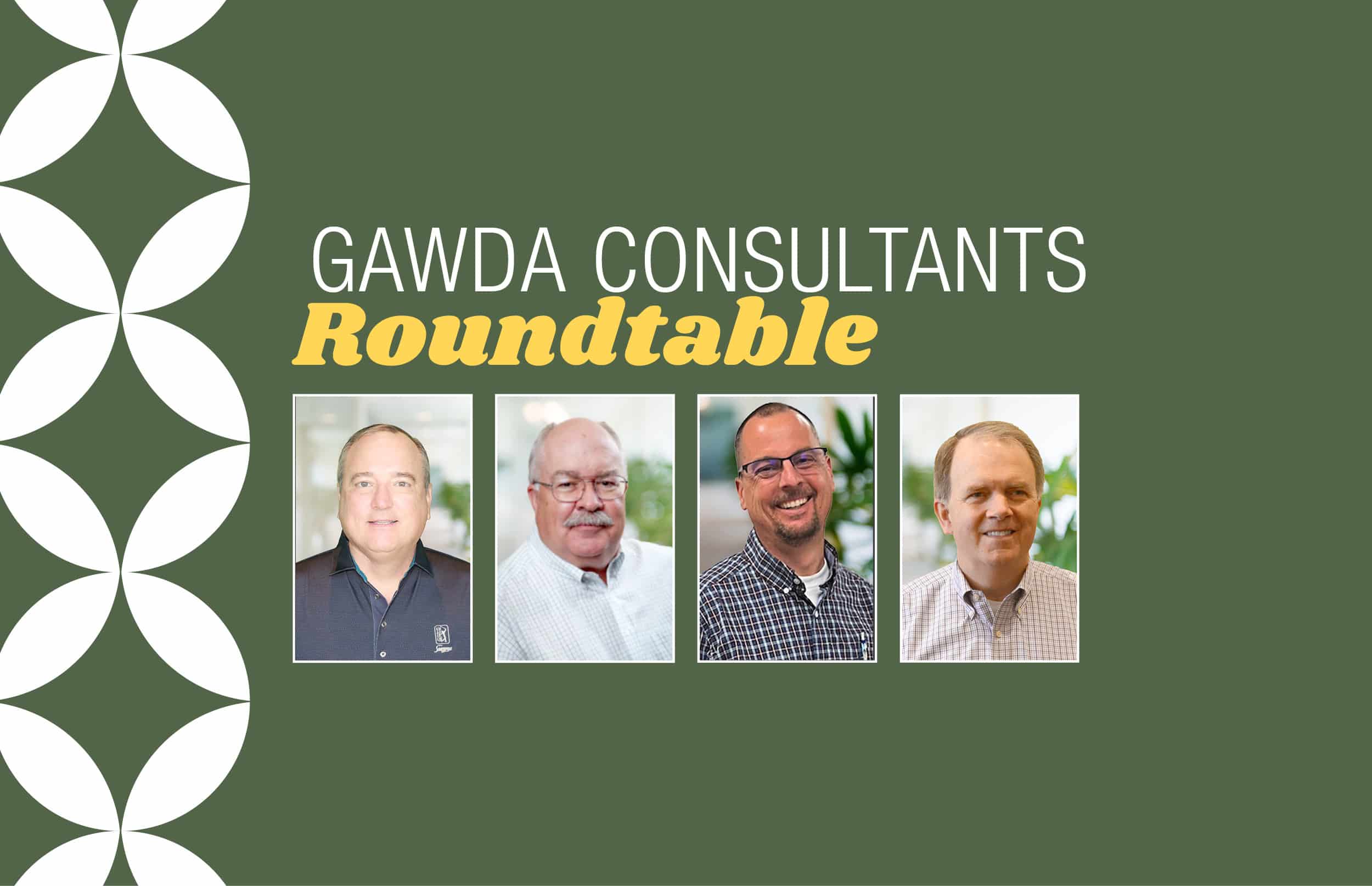

By Tom Badstubner, Ryan Combest, Mike Dodd, Rick Schweitzer, and Steve Guglielmo
We last had the opportunity to catch up with GAWDA’s amazing team of consultants before the 2025 GAWDA Annual Convention in Tampa. Since then, there has been a whirlwind of regulatory and compliance activity. As always, GAWDA’s incredible team of consultants are on hand to make sense of these new regulations, advise on compliance trends they’ve seen, and prepare GAWDA members to start 2026 off on the right track.
The GAWDA Consultant Program is a GAWDA member benefit that is included as part of your member dues to the association. It is consistently rated among the most valuable member benefits GAWDA provides. Thank you to Tom Badstubner, GAWDA’s FDA and Medical Gases Consultant, Ryan Combest, DHS, EPA, and OSHA Consultant, Mike Dodd, DOT Consultant, and Rick Schweitzer, Government Affairs and Human Resources Consultant, for lending their time and expertise to discuss these important topics. The following is a lightly edited transcript of that conversation.
Welding & Gases Today – This is our Q1 issue of Welding & Gases Today. The last time we all got together for one of these roundtables was before the Annual Convention in Tampa. So, what has been going on with the regulatory agencies since then that GAWDA members should be aware of?
Ryan Combest – We talked about this today in our monthly safety committee meeting; the EPA’s Chemical Inventory Reporting is due March 1st. There’s also a July 19th deadline for manufacturers to update their labels and SDSs for the new Hazardous Communication Standard. OSHA 300A is your annual injury and illness reporting. The actual 300A form has to be posted by February 1st. And it has to be posted in your workplace between February 1st and April 30th. And companies that meet the requirements have to submit their injury/illness reports to OSHA by March 2nd. So, even though some of those dates have gone by, it’s still a good reminder for members, just in case.
Tom Badstubner – There are three deadlines coming up for medical gas manufacturers:
Device – (e.g., Lung Diffusion Mix and Clinical Blood Gas manufacturers.) Device gas firms must adopt new ISO 13485-based SOPs by February 2nd.
Original Manufacturers – A new annual report is required for companies that are classified as “original medical gas manufacturers”. Original manufacturers are air separation plants, carbon dioxide medical grade manufacturers, helium medical grade manufacturers, or if you’re pumping your own compressed air with a compressor (not with blending). The new annual report is due on March 1st.
CARES – And all medical gas manufacturers have a CARES Report that’s due at the end of March. If you need more information, please contact [email protected].
WGT – For that new report that you mentioned, is there anything that they have to keep in mind about that, or anything unexpected that you’ve noticed so far?
Tom – It’s a new requirement, but it will not be difficult to complete. The questions are relatively simple, for example: Where are your locations? How much product did you produce? Have there been any changes in your process? Who are the people in charge?” There will be some overlap between the annual report and the CARES report.
Original manufacturers will want to complete their CARES report earlier than everyone else so they can reuse the CARES data instead of having to submit it twice.
WGT – Another time-sensitive date that we’ve got coming up is the GAWDA Spring Professional Compliance Seminar at Chart’s Ball Ground, GA, facility from March 17-19. For members who haven’t registered yet, what can they expect and why should they attend?
Tom – The focus of the Spring Compliance Seminar is on doing well on any audits, whether it’s FDA, OSHA, or DOT. And so, from an FDA perspective, we’ll be talking about how to survive and, in fact, do well on an FDA audit… especially considering the new regulations that the FDA implemented on December 18, 2025.
WGT – Looking at the schedule, it looks like you, Ryan, and Andre Marte will be on the FDA portion of things. Ryan, anything you wanted to add?
Ryan – Tom covered day one. Day two is going to be the OSHA section of the three-day course. And that will focus on how to prepare and do well during the OSHA inspection.
Tom – Marilyn Dempsey will also be a guest speaker that day.
WGT – And then, Mike, the floor is yours on Thursday.
Michael Dodd – From a DOT standpoint, I’m going to be going over all the DOT record keeping and the filing system that I’ve set up over the years. So, very similar to information from past seminars. Just making sure the members are prepared for a potential DOT Audit. I’ll be talking about some of the newer programs that have come into place, but basically, it’s like Tom said, we’re preparing you to be ready for that event. People who have used my filing system have done very, very well over the years. A lot of them have gotten perfect scores. So, we always look forward to this seminar. We’re looking forward to the in-person aspect of it. We’ve already got a bunch of people signed up, and we’re looking for a lot more people.
WGT – Since we last spoke, we’ve had quite a few Safety & Compliance newsletter updates touching on the FMCSA, PHMSA, and then the EPA issued an 18-month extension on the use of methylene chloride by laboratories. Rick, can you expand on any of that?
Rick Schweitzer – The EPA finalized an 18-month extension of the Workplace Chemical Protection Program (WCPP) and associated recordkeeping compliance dates for industrial or commercial laboratories that are not owned or operated by Federal agencies or contractors acting on behalf of the Federal government. Under this final rule, all non-Federal laboratories will share the same compliance dates with Federal and Federally contracted laboratories. This will have fairly limited impact on most GAWDA members, and it does not extend any of the compliance dates prohibiting the sale of products containing methylene chloride.
On FMCSA, they’re trying to do a couple of things. One is to take what the federal government thinks is fraud out of the system for drivers. They want to get rid of states issuing CDLs and learner’s permits to drivers who are not legally in the country or who have stayed beyond their legal status in the country. And this could affect as many as 200,000 drivers over the next two years. The states are supposed to look at whether or not a non-citizen driver is here on a program that is one of only three non-immigrant legal programs for persons to be in the country, and to make sure that the validity period for the CDL or the learner’s permit is the same or less than the period of legal residence in the United States. So, for instance, if you have a 90-day or a six-month visa to come to the U.S., you can’t get a CDL for longer than that period. New York State, for example, has been issuing CDLs just on a default basis that are good for eight years. And FMCSA is now saying, “No, you have to cut those back, not just going forward, but for existing CDLs. You have to withdraw them and make sure that the driver has a legal immigration status.” And the state driver licensing agencies have to check with the federal database on whether or not you are eligible for entitlements to make sure that there’s no overlap and that the CDL doesn’t extend beyond the dates of the legal residence for the individuals. The agency has just completed a second rulemaking on this. They got off on the wrong foot. They issued the first rule as an emergency order, and they were taken to court by a number of states, including California and several others. And the states got an initial preliminary injunction because the feds did not follow the statutory requirements, but they have issued a second final rule that seems to have corrected the prior issues. In the meantime, FMCSA is still trying to get the states to comply with these requirements. If they don’t, they’re going to lose federal highway funding.
Separately, the FMCSA is going after entry-level driver training schools that are not complying or that are issuing fraudulent records. There are 16,000 entry-level driver training schools in the country. These are private schools that are self-certifying to federal standards. Out of those 16,000, 3,000 have been removed from the list of approved schools. Another 4,500 are on notice that if they don’t come into compliance, they will be removed from it as well. So that’s almost half of the entry-level driver training schools that are either simply not compliant or that out-and-out are committing fraud by issuing credentials that are not warranted. I have confirmed with FMCSA that if you have a driver who went through a training course with one of these schools and got certified as trained and got a CDL based on that certification, that even if the driver training school subsequently loses its certification, that driver’s CDL is still valid. So that’s, I think, the key takeaway there.
And then the last one for FMCSA is the English proficiency rule. This went into effect at the end of June last year. As of then, if a driver can’t communicate adequately in English to have a conversation with an enforcement official, the driver is placed out of service. Upwards of 10,000 drivers have been issued out-of-service orders since then. And you can’t drive a commercial motor vehicle until you can meet these proficiency standards. It’s not a requirement that you be fluent in English, but you simply have to speak it well enough to be able to discuss your shipping papers, your hours-of-service status, your license status, etc. Those are the biggest things that are going on at DOT right now.
PHMSA, the only thing that they have done recently is that they withdrew a rulemaking on changing the HAZMAT registration fees. The agency really wanted to increase the fees. There was a great deal of pushback from a number of trade associations, including GAWDA, and we got them to withdraw the proposal.
WGT – Federal law enforcement has been a hot topic this year. Obviously, it hasn’t been OSHA that’s been making front-page news. But, with that in mind, is there anything that you guys are noticing trend-wise from the agencies as far as enforcement or audits or anything like that, that you think it’s important that members be aware of?
Mike – From my end, I haven’t seen any increase other than normal. And if anything, it was a pleasant surprise. I was working with a member yesterday and today about updating a couple of their cylinder requalification authorization letters, where there were a couple of address mistakes, etc. So, we sent through an update, and I wasn’t sure whether that was going to cause any problems. But, surprisingly, they not only updated it within minutes, but they also sent back the new authorization letters as attachments. It was quite surprising. It was like, “Wow, a government agency that’s actually service-oriented.” And this was within PHMSA, the DOT approvals section. It was a very pleasant experience. I was really taken aback by that. So, hopefully, maybe we’ve got a new atmosphere going up there.
Tom – We’ve had a couple of medical gas audits, mostly by state boards of pharmacy that have been particularly painful.
Rick – One other thing that’s come up recently. The president issued an executive order on reclassifying marijuana from Schedule I to schedule three. This is the same thing that the Biden administration had tried to do, but it’s taking longer than anyone has expected, I think. It’s been several years in the works. The president’s latest order recognizes that marijuana does have therapeutic value, which means that it’s not appropriate to be on Schedule I. And he’s directed the Attorney General, who controls the DEA, to use all of their powers to get the reclassification to schedule three. Now, this wouldn’t legalize marijuana under federal law, but it would make it a lesser violation. It will not affect DOT’s drug testing requirements for marijuana or prohibitions on drivers using or possessing marijuana. You would still have to go through testing for that. None of that would change. But for GAWDA members that sell to companies that produce THC or CBD products, it will make that process easier. It will be essentially legal and regulated, and it will, I think, improve their ability to do banking and contracting with their customers. So, the president is trying to get this done. I think this is something that recognizes reality. There is still some pushback from some Republican members of Congress, but otherwise, I think this is going to happen sometime this year.
WGT – We’ve talked about it before, but in light of that news, we might as well bring it up again. For members who do drug test their employees outside of the drivers, because that’s a separate thing, does this mean anything? Does that even still happen?
Rick – Yes, it does. A lot of companies test all of their employees or other non-DOT-regulated employees. And it’s really subject to state law restrictions. So, if you’re in a state like Connecticut or New York, there are substantial restrictions based on constitutional protections for employees. Other states simply allow it under company policy.
WGT – The reason I ask is that, especially in our industry, driving is not the only dangerous task at these businesses. Mixing gases, working with cylinders, especially flammable gases, is that something that is carved out the way DOT is, or not?
Rick – No, that’s subject to company policy and state law. But I agree with you that many of the positions in a fill plant are “safety-sensitive positions,” to use the term that DOT uses, even though they’re not regulated.
Mike – Yeah, there are a lot of hazardous jobs that you would think this would apply to, but they don’t.
WGT – Last question I had on my list, with the SMC coming up, I know the Safety Committee and Government Affairs committees work hand-in-hand together. Is there anything going on with either of those committees that you want to shine a light on to members that they might not be aware of?
Mike – Well, I’d be happy to say that the committees are doing well. We had 18 people on our call this morning, which was a great number of people. And we’re getting the sample safety practices completed. We’re getting pictograms completed. And I think it’s working well.
Rick – From the Government Affairs Committee’s standpoint, we are losing members. I would like to invite anyone who’s interested to let me know, and we will add you to the roster. Chuck Beal is the chairman of the committee. He and I work very closely together, but we’ve had several retirements, and other people have changed jobs. And so, our committee has dwindled, and we would very much appreciate input from other members.
WGT – Perfect, interested members can either contact Chuck or Rick or go to GAWDA.org. Anything else that we didn’t touch on that you guys wanted to mention before we go today?
Mike – I’ve got one thing. Every year, we keep track of the number of members who contact us. And I’ve noticed that my number of contacts has gone down substantially over the last year or two. And I wonder if maybe it’s because we’ve had an awful lot of what I call the “old school” compliance people who have retired and left. And we’ve got a new crowd coming on. And I wonder if either one of two things is going on. Either they don’t know who we are, and that we are out here to help them on practically any subject they can think of.
Or, and this is what I’m concerned about, that some of this newer generation get all of their answers from their phone. Google or AI. And those are great tools. I love them, and I use them myself. But I’m concerned that maybe they may not be getting good information or information that applies to our industry the way it should. But I’m just concerned that we’re not getting enough of our new compliance people to communicate with their consultants. We are here to help. We’re a member benefit. Please, if you have questions, use us.
WGT – Let’s talk that through a bit. If somebody were to get information from the Internet and it were wrong, what would be the human cost associated with that?
Mike – We’d be guessing now as to what would be wrong, but if they got wrong information on filling cylinders or wrong information on special permits or registrations or things like that, and they did things improperly…well, first of all, there are government regulations that they might violate. And if they’re doing an audit or whatever, they’d be caught, and there are some fines for that.
But even more importantly, somebody could get hurt because they didn’t follow industry practice. They followed what they read on YouTube or on a social media site, then they’d be held liable for not following industry standard practices. So firstly, we don’t want anybody hurt. We want people to do things correctly.
Rick – Mike makes a very good point. I would add to that, reliance on artificial intelligence-type answers, which are quick and dirty on the internet, is not the way to go. You need to go to the original source, to the actual regulations. And the people who are experts in those regulations are the four of us. I’ve done it myself, where I didn’t know the answer to something, did a quick Google search, and the first thing that pops up is some ChatGPT or something giving me an answer. And it might, or it might not be wrong. Where it’s wrong, and that does happen, it’s not just kind of wrong, but really wrong. As Mike said, you can be subject to regulatory violations, but much, much worse would be somebody getting hurt or having a fatality because your practices weren’t up to industry standards.