




As the demand for new construction grows and heat indexes increase, so does the effect on the health of workers in the U.S. No matter what your political beliefs may be, the numbers do not lie. Temperatures are hotter. This, as well as more people relocating to southern states, has caused the rate of worker heat-related illnesses and deaths to increase. Estimates show that approximately 28,000 work-related injuries are linked to heat, along with dozens of deaths each year.
A recent study conducted by George Washington University and Harvard School of Public Health found that when the heat index nears 85 degrees, worker injury risk climbs fast, and when it is over 90, the risk rises even more steeply. These heat work injuries were seen across almost every industry, even jobs that are performed indoors. In fact, the highest percentage of complaints were in accommodation/food service industry – almost 30%, followed by retail trade, transportation/warehousing and manufacturing. Construction, often believed to be the highest risk, reported less than 5%.
OSHA does not have a specific standard dedicated to heat stress, but relies on the General Duty clause, which requires employers to protect workers from recognized heat hazards. Some states do have their own strict standards enforcing heat safety. Also, OSHA does currently have a national emphasis program (NEL) directed at heat stress in the workplace. This program targets high-risk industries by conducting proactive inspections, ensuring workplaces provide a safety program to reduce heat stress, such as rest breaks, hydration, shade, training, and acclimatization rules. This emphasis program enforcement starts when the heat index reaches 80 degrees F or higher, or upon reports of fatalities or sicknesses.
There are several risk factors to consider when dealing with heat stress:
Dehydration: (critical factor) when our body sweats, we lose body water, salt, electrolytes, magnesium, potassium, and other critical minerals needed to regulate body temperature.
Acclimatization: Almost ½ of all heat related deaths occur on the worker’s first day on the job, or first day back after an extended period, and over 70% of heat related deaths occur during a worker’s first week. OSHA and NIOSH both recommend the 20% rule of acclimatization. This means new workers only can work 20% of normal schedule on their first day, increasing by 20% daily thereafter.
Medications: Some medications can affect the body’s ability to maintain healthy temperature.
Health Concerns: The physical health of a person can directly affect their ability to cope with heat.
Activity: The physical activity being performed by the worker could also have varying effects.
Prior Heat Illness: A worker is more susceptible to heat health issues after previously having heat stress.
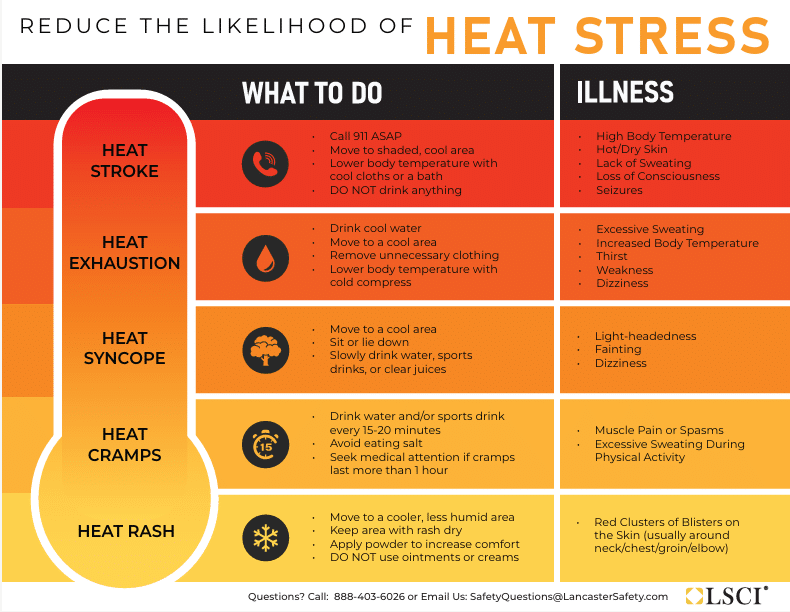
There are several degrees of heat stress that our bodies go through leading to heat stroke, a potentially fatal condition where the body temperature reaches 104 degrees, and the body has no way of controlling its temperature anymore.
Beyond the 5 stages listed in the chart above, is another condition called Rhabdomyolysis, which is a very serious heat-related illness that can be fatal. This condition is when muscles actually breakdown or disintegrate after excessive exercise without rest or cooling. When this happens, toxic components of your disintegrating muscles enter your circulatory system causing kidney damage.
There are many products available that help workers combat heat stress. These products include cooling hard hats that may reduce the temperature up to 20% from typical hard hats, cooling vests and towels that can lower the body temperature, portable umbrellas, and hydration products to mention a few.
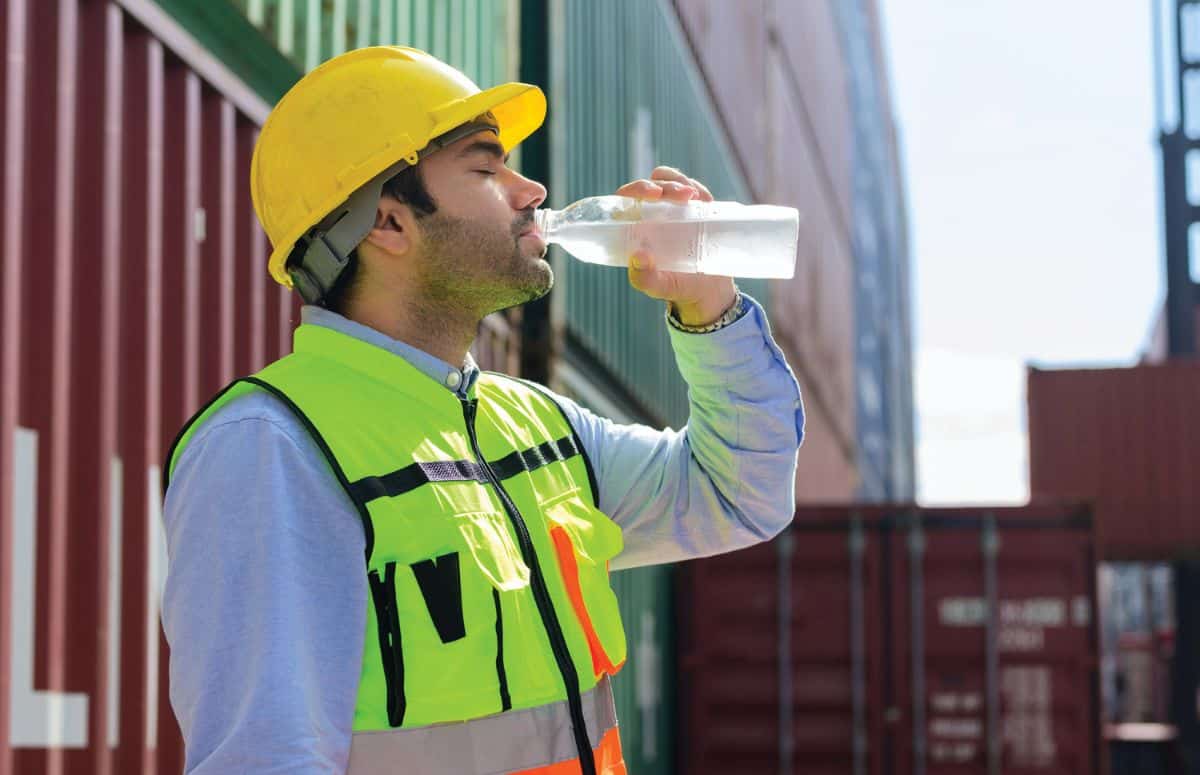
Hydration is the most critical factor in preventing heat stress and studies have shown that people will drink more water if it tastes good. This is why there has been an explosion in different brands of hydration drinks and additives for water. The best hydration drinks will have electrolytes, magnesium, salts and other minerals to help replace what the body loses in sweat.
It is the responsibility of the employer to keep their workers safe from heat-related illnesses and these safety products are a must have, even when work is done indoors. With temperatures on the rise and OSHA implementing the heat stress emphasis program, it is most beneficial for the employer to provide these heat stress reducing products, along with their other acclimatization and prevention plans. Companies are buying these products for compliance and to keep their workers healthy and productive from someone, why not you?