




I was talking with a business owner recently who told me he wasn’t too concerned about planning for the future.
He said, “If I die, they’ll figure it out.”
I stopped him right there. I said, “If you die? I didn’t know we had a choice in that.”
It got a laugh, but the point is serious. Transition is not something you can put off and deal with later. Death comes for us all, whether you plan for it or not.
I’ve written before about the stages most family businesses go through, and how important it is to recognize where you are in that process. The hard part isn’t understanding the stages. The hard part is knowing which one you’re in while you still have time to do something about it.
UNDERSTANDING THE STAGES
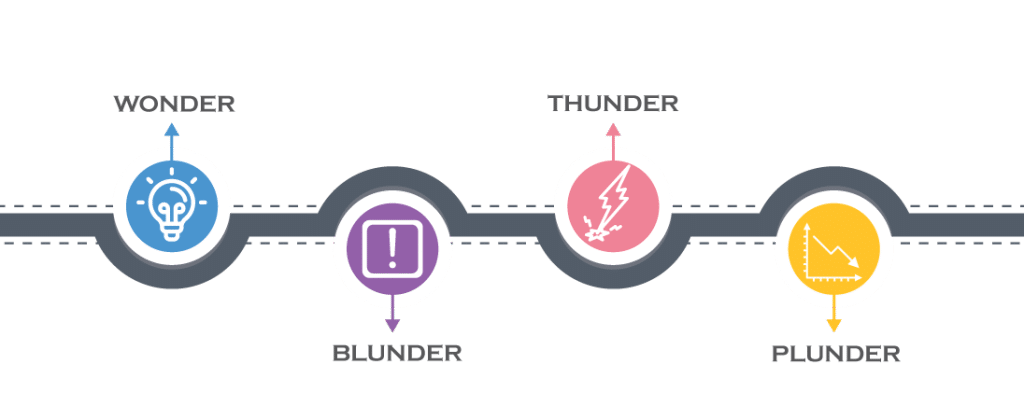
I tend to think of it in four parts: Wonder, Blunder, Thunder, and Plunder.
The Wonder stage is the beginning. That’s when people around you are wondering why in the world you’d leave a good, steady job to go into business for yourself. There’s excitement there, but there’s also a lot you don’t know yet.
The Blunder stage is where it all hits you. You start dealing with employees, insurance, taxes, all the things you never really saw when you were working for someone else. A lot of times it feels like everything you do is wrong. You’re working long hours, trying to figure it out as you go. But if you stick with it and keep working, you figure it out.
The Thunder stage is when things start to work. The business is established. You’ve got some systems in place. You’re making money. On the outside, it looks like you’ve got it figured out.
And that’s where a lot of people leave it and fail to plan for that next phase.
We’re going to spend some time at SMC walking through these stages in more detail, but more importantly, how to recognize them in your own business before it’s too late.
If that shift doesn’t happen, that’s when you move into the Plunder stage. That’s when things start to slip, usually because the transition to the next generation never really took place.
THE STAGE THAT GETS MISSED
Most of the problems I see happen in the Thunder stage.
That’s the point where the older generation needs to start changing roles. You go from being the one doing everything to being the one teaching others how to do it. You start getting the next generation ready to take over.
The problem is, most people don’t realize they’re in that stage.
They’ve worked hard for 20 or 25 years. The business is doing well. They’re enjoying it. There’s no real pressure to change anything. And so, nothing changes. And that’s where it starts to break down.
If you don’t recognize that you’re in the Thunder stage, and you don’t start that transition, then it’s going to happen anyway.
In Oklahoma City, we’ll talk through what this actually looks like inside a business, because it’s one thing to understand the concept, it’s another thing to do something about it.
I’ve said this before, and I’ll say it again. If you don’t take the steps to transition your business, it’ll get done five cars back from the black limousine on the way home from your funeral.
That’s not how anybody wants to see their life’s work handled.
I’ve seen what that looks like up close. A friend of mine and fellow former GAWDA President, Jack Butler, lost his father and was thrust into the presidency of the company overnight. In his case, his dad had done a good job preparing him, and he was able to step in. But that’s not how it usually works. And you can see how that event shaped Jack’s perspective by the way the next transition at Butler was handled so carefully and thoughtfully.
WHAT EACH GENERATION IS REALLY ASKING
One of the tougher parts of this whole process is understanding what’s being asked on both sides.
From the younger generation’s standpoint, it can feel pretty simple. They’ve been in the business for 10 or 15 years. They’ve got ideas. They’re ready to go.
What they don’t always see is what they’re asking the older generation to do. They’re asking somebody who built that business from the ground up to step back. To give up control. To trust that what they built is going to be carried forward the right way. That’s not easy.
At the same time, the older generation has to recognize that holding on too long creates its own problems. If the next group isn’t given a chance to lead, frustration builds. And over time, that frustration can spill over into the business and into the family.
I’ve seen situations where communication breaks down, where relationships start to suffer, and where families that worked side by side for years end up not speaking at all. That doesn’t happen overnight, but it happens.
WHAT MAKES IT WORK
There are a few things that show up over and over again when a transition works the way it’s supposed to.
First, you’ve got to have a common goal. Both sides need to understand what you’re working toward and what the end result is supposed to look like.
Second, you’ve got to start early. This isn’t something you figure out in a year or two. It takes time. In our case, it took about 15 years. The earlier you start, the better off you’re going to be.
Third, you’ve got to be empathetic. Not sympathetic, but empathetic. You’ve got to be able to put yourself in the other person’s shoes and understand what they’re dealing with.
Fourth, you’ve got to remember you were family long before you were ever boss and employee. And you’ll still be family after that employee relationship ends. That part can’t get lost in the process.
And finally, you’ve got to stay with it. It’s not always smooth. There are going to be bumps along the way. But if you keep the focus on where you’re trying to go, you can work through it.
WHEN THE NEXT GENERATION ISN’T READY
There’s another situation that comes up more often than people expect.
Sometimes the older generation is ready to step away, but the next generation isn’t quite ready to take over.
When that happens, one of the most important roles in the business becomes what I would call the “corporate heir.” That’s the key employee who has been there for years, understands the business, and can step in to help guide things until the transition is complete.
It’s not always an easy decision, but it’s often the difference between maintaining stability and letting things drift.
THE TIMING MATTERS
We’re at a point right now where this is becoming more urgent across the industry.
A friend of mine used the term “silver tsunami,” and I told him I was going to steal it. There are a lot of business owners getting to the point where transition isn’t something you think about anymore. It’s something you have to deal with.
And it’s not just on the distributor side. Manufacturers are going through the same thing. A lot of closely held companies are facing the exact same questions at the same time. That makes it even more important to understand where you are and what needs to happen next.
MOVING FORWARD
Transition is going to happen.
The question is whether it happens on your terms or under circumstances you didn’t plan for.
The businesses that get through it the right way are the ones that recognize the stage they’re in, start early, and stay committed to working through it.
If you can do that, you give your business, and your family, a much better chance to keep things moving forward into the next generation.
And that’s really what we’ll be digging into at SMC. Not just the stages themselves, but how to recognize them, how to manage them, and how to avoid getting caught in that Thunder stage when it matters most
Attend Randy Squibb’s presentation “The Four Stages of Family Business…And the Tools You Need to Navigate them” on Monday, May 18th from 11:15 a.m. to 12:15 p.m.